Cartier remains one of the most influential names in luxury watchmaking history. While many collectors associate Cartier primarily with jewelry, the brand has played a critical role in the development of modern wristwatches.
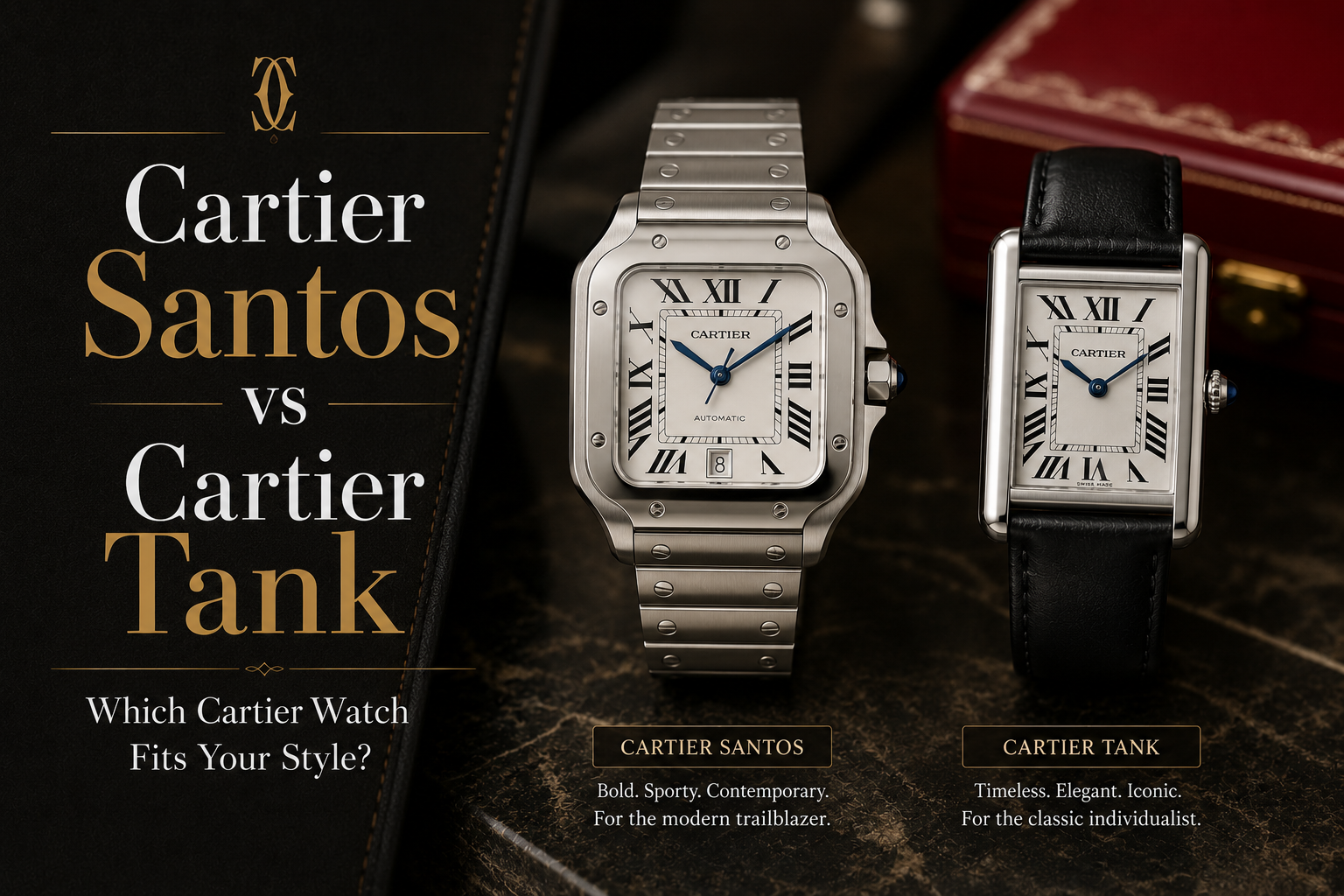
Among all Cartier models, the Santos and Tank stand as the brand’s two most iconic and enduring designs. Both watches have become symbols of timeless sophistication, yet they deliver completely different personalities and wearing experiences.
The Cartier Santos is widely recognized as one of the earliest purpose built wristwatches ever created. Designed for aviator Alberto Santos Dumont in the early 1900s, the Santos helped popularize wristwatches during an era when pocket watches still dominated.
The Santos immediately distinguished itself with its square case, exposed bezel screws, and practical wearability.
Over time, the Santos evolved into one of Cartier’s most versatile luxury watches. Modern references blend sporty elegance with refined proportions, making the watch suitable for nearly every setting.
The integrated bracelet design contributes significantly to the Santos’ visual identity. Its clean lines and balanced proportions create a watch that feels contemporary while still remaining historically important.
Collectors often choose the Santos because it offers a distinctive alternative to traditional round sports watches.
The Cartier Tank takes an entirely different design approach. Inspired by military tank silhouettes from World War I, the Tank emphasizes geometry, minimalism, and understated elegance.
The rectangular case shape and Roman numeral dial have remained remarkably consistent for decades.
The Tank has long been associated with artists, actors, intellectuals, and influential public figures. Its refined proportions and dress oriented aesthetic create a watch that feels sophisticated without appearing overly flashy.
Collectors frequently describe the Tank as one of the purest dress watches ever designed. Choosing between the Santos and Tank often depends on lifestyle and personal style preferences.
The Santos generally feels sportier and more versatile. Its bracelet integration and stronger wrist presence make it highly practical for daily wear.
The Tank leans more heavily toward formal elegance and minimalist refinement.
The Santos works exceptionally well as an everyday luxury watch because it balances comfort, durability, and visual character.
Modern Santos references also include quick change bracelet systems that increase versatility further. The Tank appeals strongly to collectors who appreciate subtle luxury and classic proportions.
While sports watches dominate much of the modern luxury market, the Tank offers an entirely different type of sophistication.
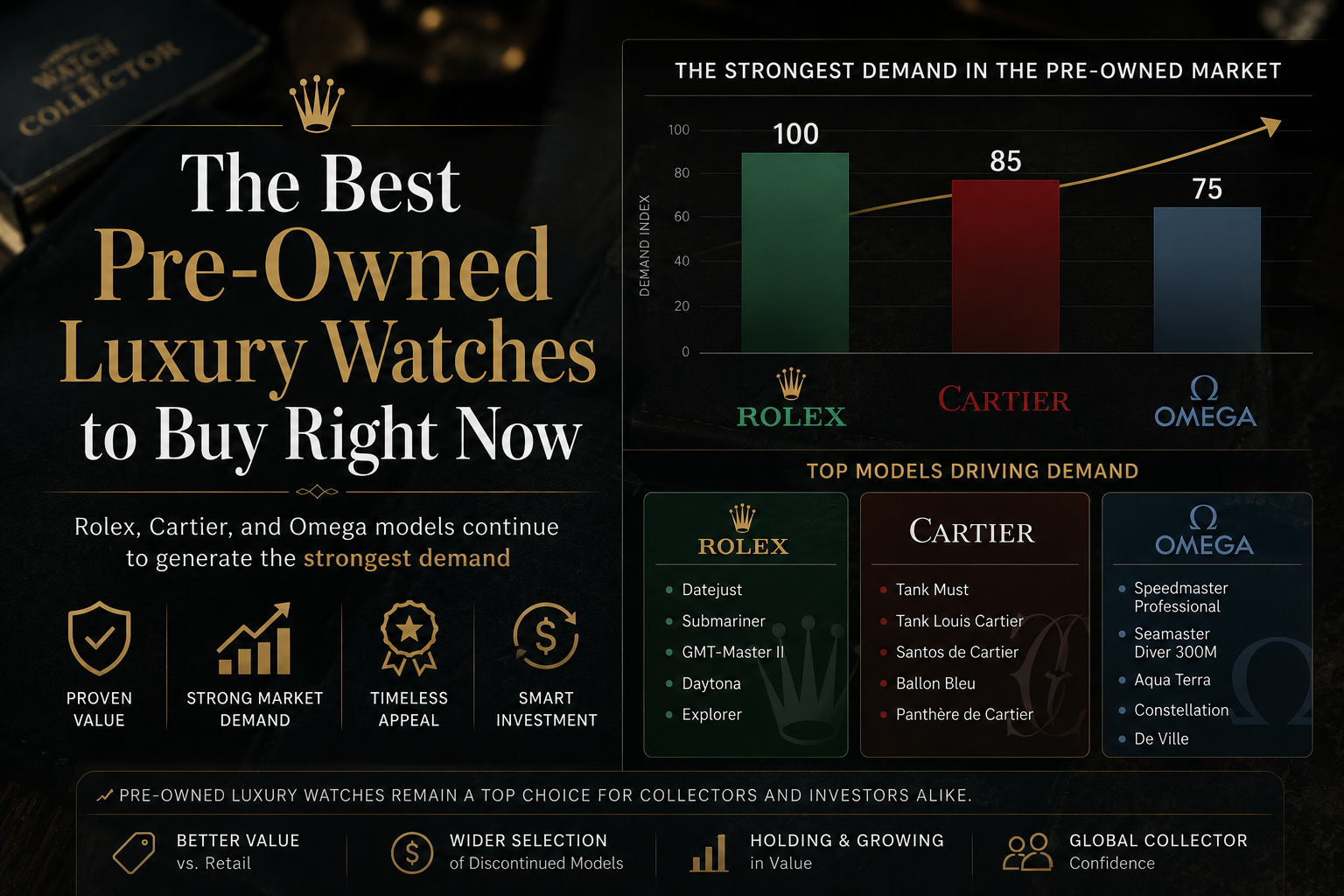
Both watches continue performing strongly in the secondary market because of Cartier’s growing influence within modern collecting.
Cartier’s recent resurgence has introduced many younger collectors to the brand’s historical importance. Vintage Cartier collecting has also accelerated substantially over recent years.
Collectors increasingly appreciate that Cartier watches provide strong design identity without relying on oversized proportions or aggressive styling.
The Santos and Tank both reflect Cartier’s broader philosophy of combining elegance, practicality, and timeless aesthetics.
Neither watch feels driven by trends, which contributes significantly to their long term appeal. Collectors entering the Cartier market should focus on proportions and wearability.
The Santos generally feels more casual and sporty, while the Tank excels in formal and refined environments.
Both watches, however, remain versatile enough to adapt to modern lifestyles.
The luxury watch market in 2026 continues rewarding timeless design, and few brands embody timelessness better than Cartier.
Whether choosing the Santos or Tank, collectors gain access to one of the most historically important design legacies in watchmaking.
Luxury Time Brokers continues helping collectors source authenticated Cartier watches while providing guidance on collectibility, sizing, market trends, and long term ownership.