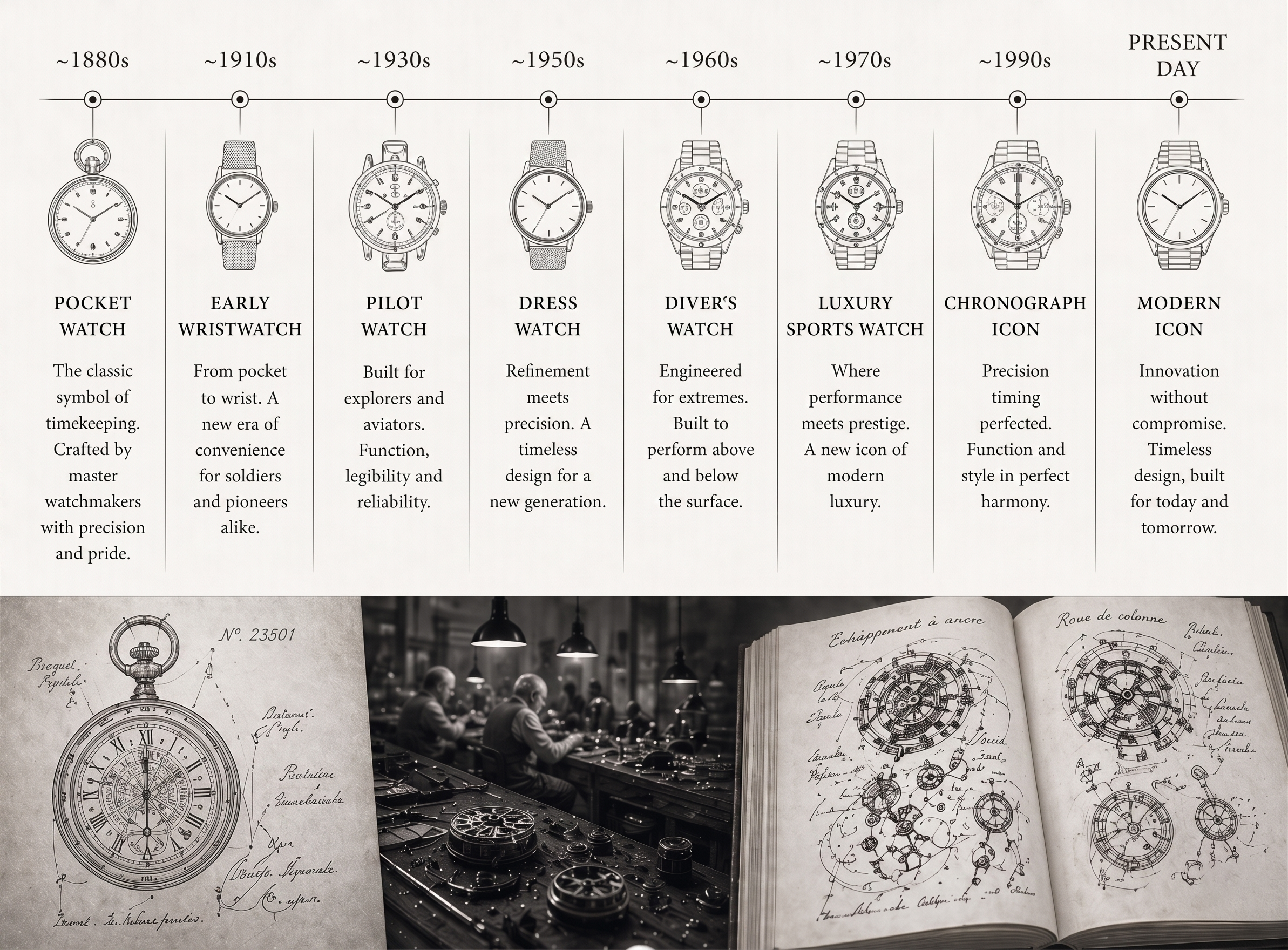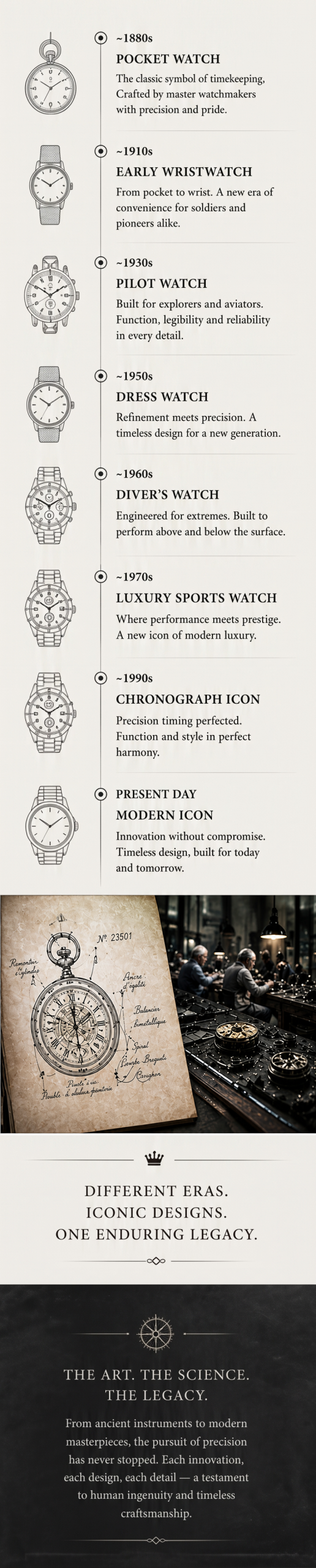
Origins Of Time
Uncover The History Of The World's Most Revered Timepieces

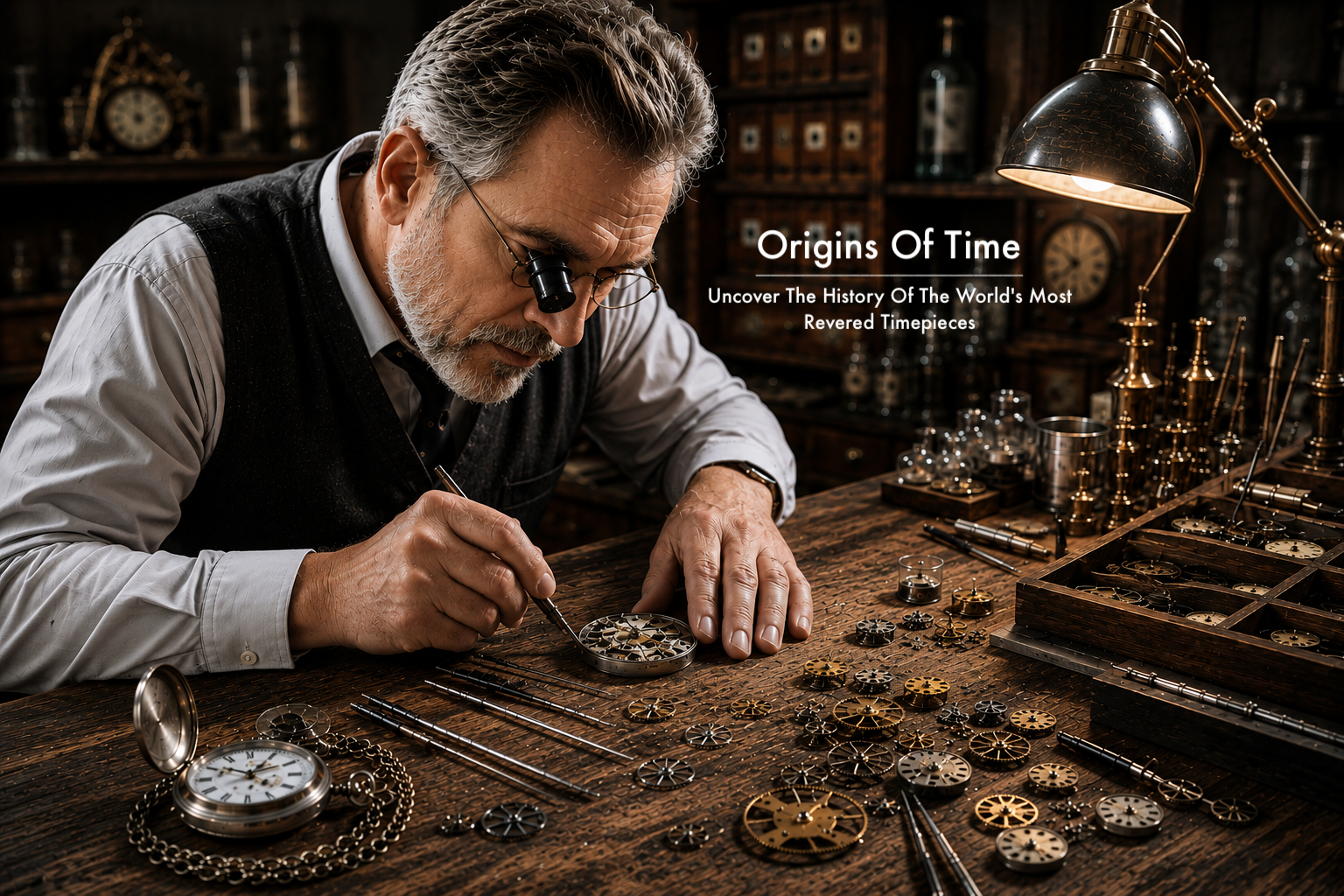
Uncover The History Of The World's Most Revered Timepieces
Explore Timepiece Stories
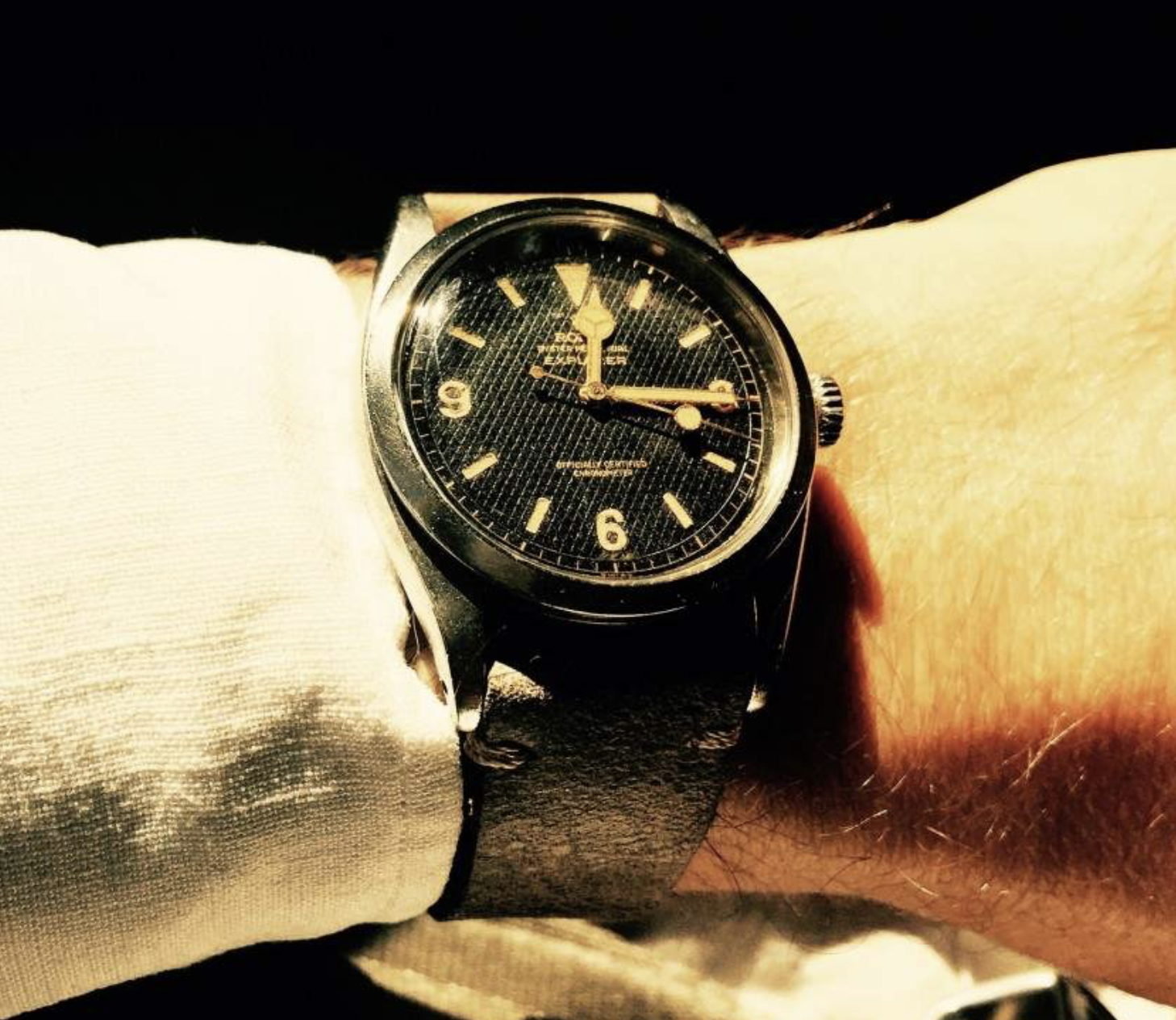
Introduced in 1953, the Rolex Explorer was created as a result of Rolex's sponsorship of Sir Edmund Hillary and Tenzing Norgay's legendary ascent of Mount Everest. Prior to the first verified summit, Rolex had been supplying Oyster Perpetual watches as experim ental models for climbing expeditions from the late 1930s onward, but the Explorer reference 6350 marked the official birth of a dedicated model for mountaineering. The Explorer 6330 was designed for the extreme conditions of high altitude exploration, featuring a rugged, water resistant stainless steel case and the self winding, chronometer certified movement protected by the Oyster case's screw down crown and caseback. Its black dial introduced the now iconic 3-6-9 numerals alongside a triangular 12 o'clock marker and luminous Mercedes hands an instantly legible design optimised for quick reading in harsh environ-ments. Though modest in its 36mm size and utliitarian by nature, the reference 6350 was powered by the robust Caliber A296 movement and bore the label "Explorer" on its dial, distinguis hing it from its predecessors. Its purpose built durability and legibility resonated deeply with the growing spirit of post war exploration. Despite no explicit mention in marketing of the Mount Everest summit, the watch quickly became identified with the "first to the summit" narrative, largely due to Rolex's earlier sponsorship and the name "Explorer". As global adventurism grew, so did the Explorer's legend, symbolizing human tenacity and the spirit of adventure. Its design set the blueprint for generations of exploration watches, defining what a rugged, reliable tool watch should be.
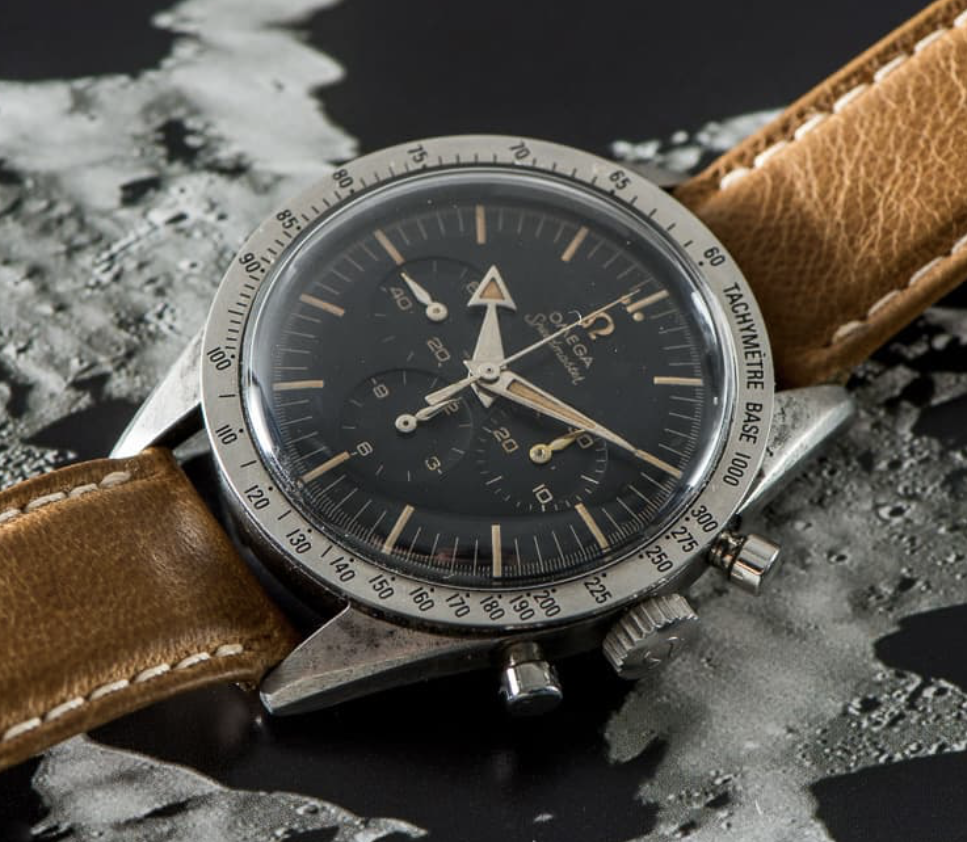
The Omega Speedmaster CK 2915, introduced in 1957, is the very first Speedmaster and the foundational reference of one of the most iconic chronographs in watchmaking history. Originally conceived as a professional racing instrument, the CK 2915 was a groundbreaking design, becoming the first wristwatch ever to feature an external tachymeter bezel a revolutionary innovation that permanently changed chronograph design and remains an industry standard today. It was powered by Omega's legendary Caliber 321, a column wheel movement celebrated for its precision, durability, and craftsmanship, which would later be used in all early NASA issued Speedmasters, including the watches wom during the Apollo Moon missions. Distinguished by its rare Broad Arrow hands, steel bezel, and highly legible black dial, the CK 2915 established the essential design DNA that defines every Speedmaster that followed. Produced in extremely limited numbers between 1957 and 1959, the CK 2915 is now regarded as one of the most important and collectible chronographs ever created, representing not only the birth of the Speedmaster, but the origin of a true horological legend.
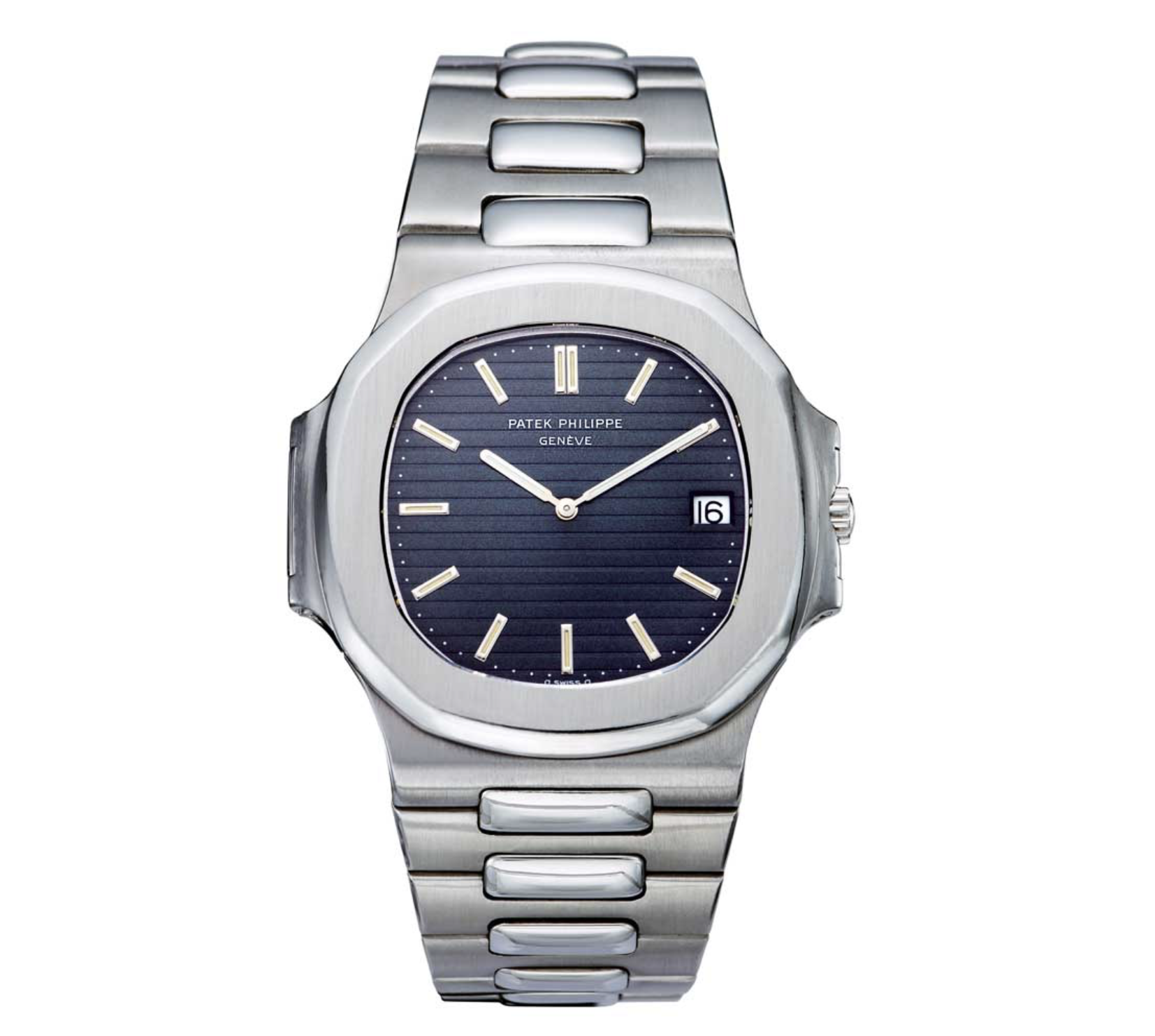
The Patek Philippe Nautilus was introduced in 1976 during a time of transformative change in the watch industry, when traditional Swiss watch brands were challenged by the rise of quartz technology and the growing appeal of the luxury sports watch. Designed by the legendary Gérald Genta, the Nautilus defied convention for the house of Patek Philippe, a brand known for its elegant dress watches. Reference 3700 featured a bold, octagonal bezel with softened edges, inspired by a ship's porthole, and was crafted entirely from stainless steel an audacious choice for a high end watch. Launched as "The Nautilus. It goes with it," the 42mm "Jumbo" case housed the ultra thin, automatic caliber 28-255 C, based on the Jaeger LeCoultre 920, yet offering water resistance up to 120 meters. Its Aanılırs horizontally embossed blue black gradient dial and integrated stainless steel bracelet were both durable and sophisticated. The Nautilus struck a chord with a new generation that valued both refinement and resilience, echoing the lifestyle of the era's jet setters and luxury adventurers. It marked a departure with its tagline "One of the world's costliest watches is made of steel, highlighting both its luxury and robustness. While initially met with ske ptisim from traditionalists, the Nautilus rapidly garnered a dedicated following and reset expectations of what a Patek Philippe could represent. Reference 3700 is often credited with pioneering the luxury sports watch category, creating a blend of sportiness and elegance that still defines the Nautilus name today as a timeless icon of horology.
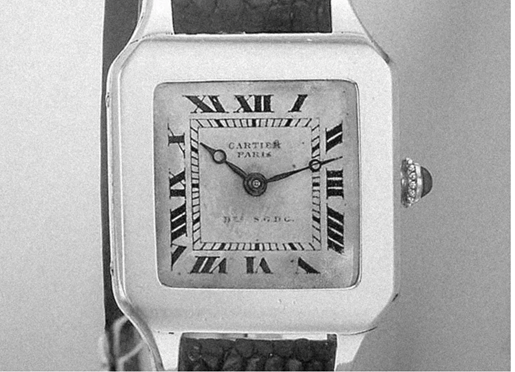
The very first Cartier Santos was created in 1904 by the French jeweler Louis Cartier for his close friend, Brazilian aviation pioneer Alberto Santos Dumont. At the time, most people relied on pocket watches, which were impractical for pilots who needed both hands on the controls of their aircraft. Santos Dumont complained to Cartier that checking the time during flight required fumbling with a pocket watch, something difficult and dangerous while piloting early flying machines. To solve this problem, Louis Cartier designed a flat wrist worn timepiece with a square case and leather strap, allowing the aviator to read the time instantly without removing his hands from the controls. This watch became known as the Cartier Santos, named after its famous wearer. Santos Dumont publicly wore the watch while flying his aircraft around Paris, making it one of the earliest wristwatches ever seen in public and helping popularize the concept of wrist worn timekeeping for men. The design itself was revolutionary. The watch featured a square case with visible screws on the bezel, bold Roman numerals, and railroad style minute track design elements that would become enduring signatures of Cartier watchmaking. Unlike traditional round pocket watches of the era, the Santos embraced a modern geometric aesthetic that aligned with the technological optimism of the early aviation age. In 1911, Cartier began commercial production of the Santos, making it one of the first wristwatches ever mass produced for men. The model later evolved into the Santos Dumont and the Santos de Cartier, but the core design square case, exposed screws, and aviation heritage remains largely unchanged more than a century later. Today, the Cartier Santos is widely regarded as one of the most important watches in horological history, not only for its distinctive design but also for helping transition men's timekeeping from pocket watches to wristwatches during the early twentieth century.
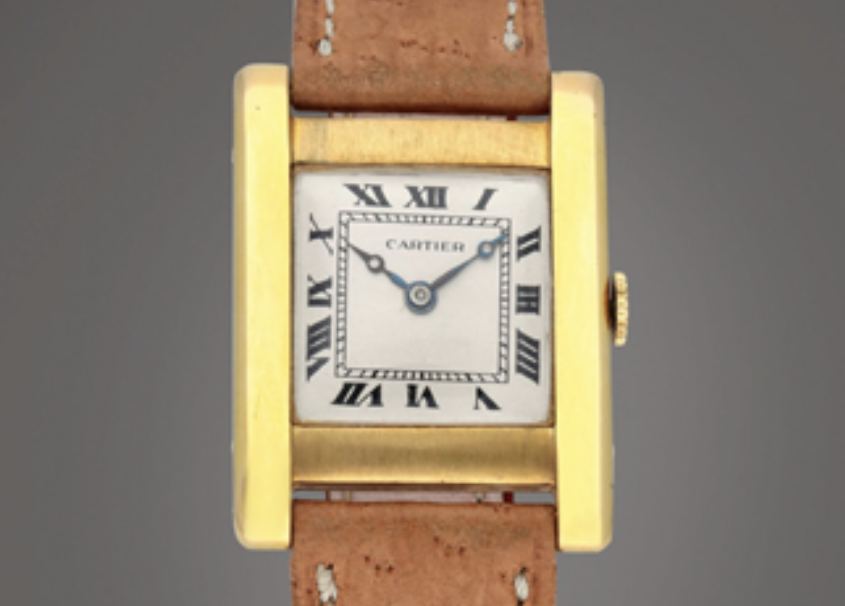
The Cartier Tank, introduced in 1917, is one of the most historically significant wristwatches ever created. Designed by Louis Cartier, the watch was conceived during the final years of World War I, a period when military technology and modern industrial design were reshaping the world. Louis Cartier drew direct inspiration from the Renault FT 17, one of the most advanced armored vehicles used by French forces during the war. When viewed from above, the Renault tank's rectangular body with parallel tracks running along each side suggested a clean architectural form. Cartier translated this structure into a wristwatch; the central rectangular case represented the tank's body, while the two vertical sidebars known as brancards echoed the tank's treads. This design produced a watch that was radically modern compared with the round pocket watch derived wristwatches of the era. The earliest prototype was presented in 1917 to John J. Pershing, commander of the American Expeditionary Forces in Europe. Cartier formally released the model to the public in 1919, producing a small series of the first commercial examples known today as the Tank Normale. The watch featured a rectangular case with straight brancards, a silvered dial with bold Roman numerals, chemin de fer minute track, blued steel sword hands, and a sapphire cabochon crown design elements that would become enduring signatures of Cartier watchmaking. Unlike most watches of the time, which prioritized mechanical innovation, the Tank Normale emphasized pure design and proportion, aligning with the emerging Art Deco aesthetic that would soon dominate architecture, fashion, and decorative arts. Its geometric form, symmetry, and restrained elegance reflected a new modernist philosophy where function and form were inseparable. Over the following decades, the Tank evolved into numerous variations including the Tank Cintrée 1921, Tank Louis Cartier 1922, and Tank Française 1996, but the Tank Normale remains the original blueprint. More than a century later, the design is still produced in limited editions and is widely regarded as one of the most recognizable and influential wristwatch designs ever created. The Cartier Tank Normale did more than introduce a new watch; it established the rectangular wristwatch as an icon of modern design, worn by artists, statesmen, and cultural figures for generations. Its minimalist geometry and military inspiration continue to represent the perfect union of engineering influence and timeless elegance.
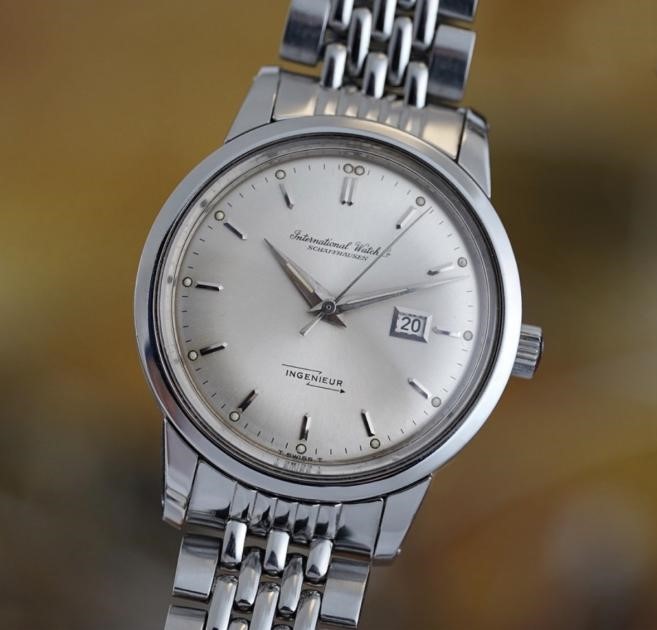
The IWC Ingenieur Ref. 666 AD, introduced in 1955 by IWC Schaffhausen, was created during a period when the rapid expansion of electrical technology was presenting a serious challenge for mechanical watches. Engineers, scientists, and technicians increasingly worked around strong magnetic fields generated by power stations, laboratories, and industrial equipment. Magnetism could easily disrupt a watch's balance spring and escapement, causing a dramatic loss of accuracy. IWC set out to design a professional timepiece capable of resisting these conditions, giving birth to the Ingenieur, French for engineer. To achieve this goal, IWC developed the reference 666, the first Ingenieur model, which incorporated a soft iron inner cage surrounding the movement. This Faraday cage shielded the caliber from magnetic fields of up to approximately 1,000 gauss, an extraordinary level of protection for the mid 1950s. Inside the watch was IWC's newly developed automatic caliber 852, part of the brand's legendary Pellaton winding system series, engineered by technical director Albert Pellaton. The system used a pawl based winding mechanism that was more durable and efficient than traditional rotor designs, ensuring reliable winding even in demanding professional environments. The AD designation in 666 AD refers to the automatic date variant, adding a practical date window at 3 o'clock while maintaining the model's utilitarian aesthetic. The watch featured a robust stainless steel case measuring approximately 36 mm, with a clean, highly legible dial characterized by applied markers, luminous hands, and a minimalist design emphasizing functionality over ornamentation. Its understated look reflected the watch's professional purpose, precision and resilience rather than luxury display. Although the early Ingenieur models were primarily tools for engineers and scientists, the reference 666 would become historically significant as the foundation of one of IWC's most enduring lines. The technical DNA established in the 1955 model antimagnetic protection, mechanical reliability, and industrial design clarity directly influenced later generations of the Ingenieur family. This lineage eventually culminated in the iconic 1976 Ingenieur SL designed by Gérald Genta, which transformed the model into a luxury sports watch with integrated bracelet styling.
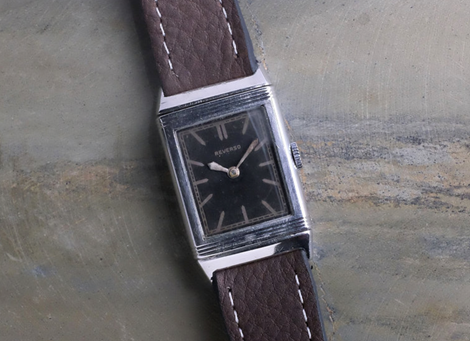
The Jaeger LeCoultre Reverso was born in 1931 from a practical problem encountered on British polo fields in colonial India. During matches, officers of the British Army frequently shattered the fragile glass crystals of their wristwatches from the impact of mallets and polo balls. Swiss businessman César de Trey, who was traveling in India at the time, was challenged by an officer to create a watch that could withstand the rigors of the sport. De Trey returned to Switzerland and partnered with watchmaker Jacques David LeCoultre and Parisian designer René Alfred Chauvot, who patented an ingenious reversible case in 1931. The design allowed the watch case to slide along its carrier and flip over, protecting the dial beneath a solid metal back during play. The rectangular case reflected the Art Deco aesthetic that dominated the era, with clean geometric lines and gadroons framing the dial. Manufactured by Jaeger LeCoultre, the Reverso quickly transcended its sporting origins and became a symbol of refined design and technical ingenuity. Early models were offered in steel, gold, and two tone variants, often with the blank caseback left intentionally smooth so owners could engrave initials, coats of arms, or personal motifs. Over time, the watch evolved into one of the most recognizable rectangular watches ever produced, inspiring countless variations including dual time, calendar, and skeletonized movements. More than ninety years after its debut, the Reverso remains one of watchmaking's most enduring designs, an elegant solution to a sporting problem that became a timeless icon of Swiss horology.

The Audemars Piguet Royal Oak Offshore was introduced in 1993 to celebrate the 20th anniversary of the original Audemars Piguet Royal Oak. While the 1972 Royal Oak designed by Gérald Genta had revolutionized luxury watchmaking with its stainless steel sports design, Audemars Piguet wanted to create a far more aggressive and modern interpretation for a new generation of collectors. The task fell to young designer Emmanuel Gueit, who was only in his early twenties when he conceived the watch. His idea was radical: take the refined Royal Oak and push every dimension further, bigger, thicker, and more industrial. The resulting case measured 42 mm, enormous for the early 1990s, with thick crown guards, visible rubber gasket seals, and an integrated chronograph. Its bold proportions and rugged construction led collectors to nickname the watch "The Beast." The first reference, Ref. 25721ST, featured the Royal Oak's signature octagonal bezel with exposed screws, but the Offshore added more muscular design elements and a Méga Tapisserie dial, with larger textured squares that reinforced its sport tool aesthetic. At launch, the watch shocked traditional collectors, many of whom felt it strayed too far from the elegance of the original Royal Oak. However, the Offshore ultimately became a defining symbol of the luxury sports chronograph category and helped push the industry toward larger watch sizes. Over time, the Royal Oak Offshore evolved into one of the most recognizable modern luxury watches, worn by athletes, celebrities, and collectors worldwide. What began as a controversial experiment in 1993 ultimately expanded the Royal Oak legacy into a new era, transforming Audemars Piguet into a dominant force in contemporary high end sports watchmaking.
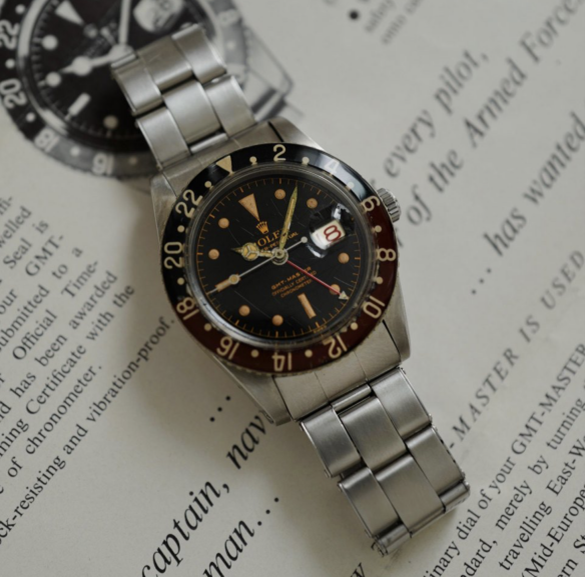
The Rolex GMT Master Reference 6542, introduced in 1955, was created during the rapid expansion of intercontinental jet travel, when pilots began regularly crossing multiple time zones on long haul flights. At the request of Pan American World Airways Pan Am, Rolex developed a specialized tool watch that would allow pilots to simultaneously track Greenwich Mean Time GMT and local destination time. The solution was revolutionary: a fourth 24 hour hand paired with a rotating 24 hour bezel, enabling aviators to monitor reference time while adjusting the bezel to display local time. The earliest models featured a striking red and blue Pepsi bezel, representing day and night hours, crafted from Bakelite with luminous radium filled numerals, a visually distinctive but fragile material that was later replaced with aluminum inserts after durability and radiation concerns arose. Housed in a 38 mm Oyster case with no crown guards, the GMT Master 6542 was powered by the Rolex Caliber 1036 automatic movement, adapted from the brand's proven chronometer calibers but modified to drive the additional GMT hand. Designed specifically as a professional navigation instrument, the watch quickly became standard equipment for many Pan Am flight crews during the golden age of aviation. Its practicality extended beyond pilots, however, as international business travelers began adopting the model as global commerce expanded in the post war era. Although produced only until 1959, the GMT Master 6542 laid the foundation for one of Rolex's most enduring professional watch families. Its association with early jet age aviation and its distinctive Bakelite bezel, now extremely rare due to its fragility, have made surviving examples among the most coveted vintage Rolex sports watches. The reference also gained unexpected cultural fame when actress Honor Blackman wore one as Pussy Galore in the 1964 film Goldfinger, further cementing the model's iconic status. Today, the 1955 GMT Master 6542 is widely regarded as the origin of the modern dual time travel watch, a pioneering instrument born from the dawn of the jet age that transformed how pilots and eventually the world kept track of time across continents.
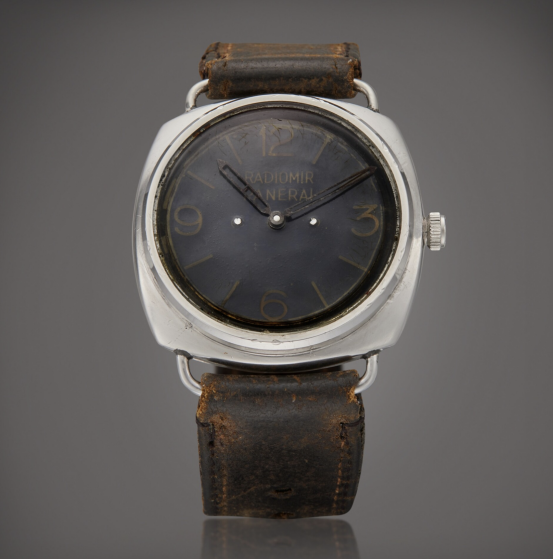
The story of the Panerai Radiomir 3646, introduced in 1936, begins not in a watch boutique but within the covert operations of the Italian Royal Navy. During the mid 1930s, the navy's elite underwater commandos, later known as Decima Flottiglia MAS, required specialized instruments capable of functioning in the most extreme maritime environments. Their missions involved stealth infiltrations of enemy harbors, attaching explosives to warships while operating in near total darkness beneath the surface. Precision timing and instant readability were essential, prompting the navy to commission Officine Panerai, a Florentine manufacturer of naval instruments, to develop a purpose built underwater wristwatch. To achieve the reliability required for combat operations, Panerai partnered with Rolex, which supplied the robust 47 mm cushion shaped Oyster case and a highly dependable hand wound mechanical movement. The oversized case, remarkably large for the era, was designed to ensure exceptional legibility underwater while also providing superior water resistance. The dial featured bold numerals and markers arranged in a stark, highly legible configuration, often seen in the early California dial layout combining Roman numerals, Arabic numerals, and baton indices. This unusual design enhanced orientation and readability for divers operating in dim or murky conditions. What truly distinguished the watch was its luminous technology. Panerai had patented a radium based compound known as Radiomir in 1916, originally developed for military instruments requiring visibility in darkness. By applying this compound to the watch dial, often within an early form of the now famous sandwich dial construction, the numerals glowed intensely, allowing commandos to read the time instantly during nighttime missions beneath the sea. At the time, this level of luminescence was revolutionary and gave the watch its name. The Radiomir 3646 was never intended for civilian use. Produced only in extremely limited quantities, these watches were issued directly to Italian naval divers and worn over thick wetsuits using extended leather straps. During World War II, they accompanied some of the most daring underwater operations in naval history, where frogmen piloted slow moving torpedoes into enemy ports and carried out sabotage missions against Allied fleets. Although originally built purely as a military instrument, the design language of the Radiomir 3646 would ultimately shape the identity of Panerai watches for generations. Its oversized cushion case, minimalist dial, and emphasis on legibility became hallmarks of the brand. In later decades, Panerai would evolve the concept into new models, most notably the Luminor, yet the DNA of the original Radiomir remains unmistakable.
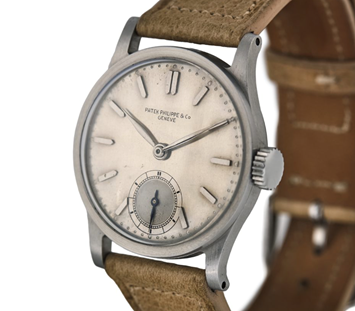
The Patek Philippe Calatrava Ref. 96 was introduced in 1932, marking one of the most important moments in the history of Patek Philippe. The watch was created during a pivotal period when the company had just been acquired by the Stern family, who sought to redefine the brand's identity and stabilize the company during the economic turmoil of the Great Depression. Their vision was to produce a refined wristwatch that embodied timeless elegance and mechanical purity rather than excessive decoration. Inspired by the Bauhaus design philosophy, which emphasized simplicity, balance, and functional beauty, the Calatrava Ref. 96 introduced a radically clean aesthetic for the era. The watch featured a perfectly proportioned 31 mm round case, thin polished bezel, understated hour markers, and a small seconds subdial at 6 o'clock. This minimalist approach was revolutionary in the early 1930s, when many watches still carried ornate pocket watch styling. The model was powered by the manually wound Caliber 12 120 movement, a highly refined Swiss mechanism known for its reliability and precise finishing. The name Calatrava itself comes from the Calatrava Cross, a medieval symbol adopted by the brand as its official emblem in the late 19th century. With the launch of the Ref. 96, the Calatrava line quickly became the purest expression of Patek Philippe's philosophy: a watch where proportion, craftsmanship, and restraint define true luxury. Today, the Calatrava Ref. 96 is regarded as the foundation of the modern dress watch and the blueprint for countless elegant timepieces that followed. Its timeless design has influenced nearly every subsequent Calatrava model for over 90 years, making it one of the most historically significant wristwatches ever produced and a cornerstone of vintage Patek Philippe collecting.
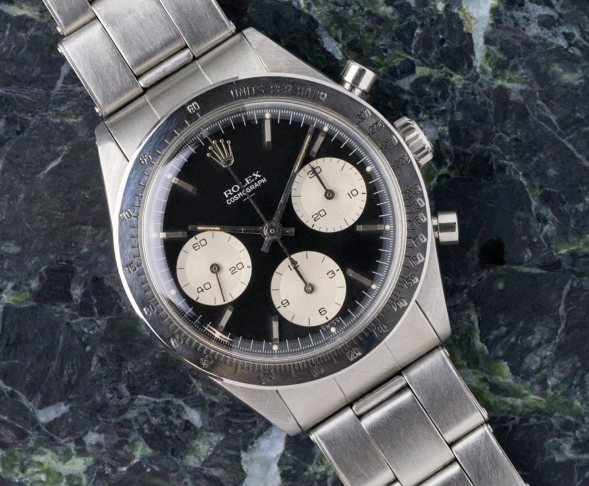
The Rolex Cosmograph Daytona Ref. 6239, introduced in 1963, was born from the golden era of international motorsport, when professional racing demanded precise timing instruments capable of measuring speed and lap intervals with absolute accuracy. During the early 1960s, chronographs were becoming essential tools for race drivers and pit crews, yet most watches required complex calculations to determine average speed. Rolex addressed this need by creating the Cosmograph, its first chronograph with a tachymeter scale engraved directly onto the metal bezel, allowing drivers to instantly read average speeds over a measured mile or kilometer. Powered by the manually wound Valjoux 72 based caliber 722, the watch featured a clean, highly legible dial with contrasting sub registers designed for quick readability under racing conditions. Although originally marketed simply as the Cosmograph, the model soon became permanently linked with the legendary Daytona International Speedway in Florida, where Rolex became the official timekeeper of endurance races such as the 24 Hours of Daytona. By the late 1960s, the word Daytona began appearing on the dial, cementing the watch's identity as the ultimate driver's chronograph. The Ref. 6239 laid the foundation for what would become one of the most celebrated sports watches in history, later immortalized by actors and racers such as Paul Newman, whose association with exotic dial Daytonas turned the reference into one of the most coveted collector pieces ever produced. Today, the 1963 Cosmograph 6239 stands as the origin point of the Daytona lineage, a watch born from the high speed world of racing that evolved into one of the most iconic chronographs ever created.
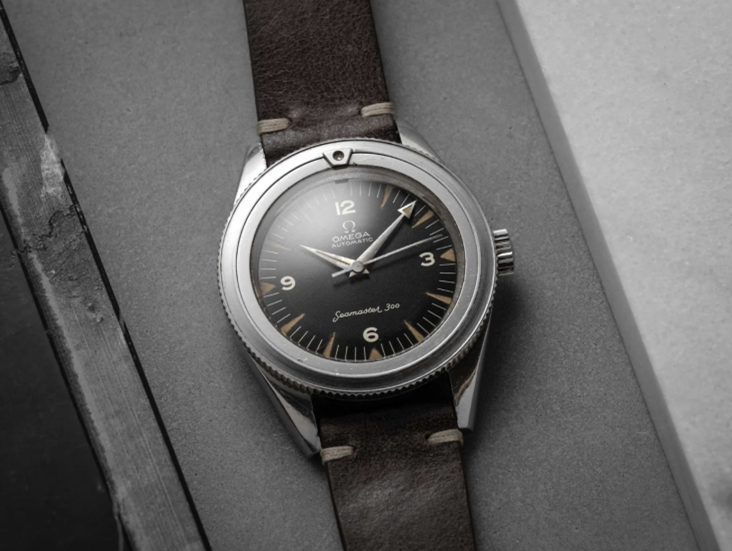
The Seamaster 300 reference CK2913, introduced in 1957 by Omega, marked the brand's first purpose built professional dive watch and one of the most significant tool watches of the mid 20th century. Developed during a period when recreational and professional scuba diving was rapidly expanding, the watch was part of Omega's legendary Professional Trilogy of 1957, released alongside the Speedmaster and Railmaster. The CK2913 was engineered to meet the growing demand for reliable underwater instruments, featuring a robust stainless steel case measuring roughly 39 mm, a rotating dive bezel for tracking immersion time, and large luminous markers for maximum visibility in dark underwater conditions. One of its most recognizable features was the broad arrow hour hand, paired with oversized radium filled indexes designed for legibility during deep dives. Inside, Omega equipped the watch with the automatic Caliber 501 movement, known for durability and precision. Although officially named the Seamaster 300, the watch was initially tested to depths of around 200 meters, a limitation of testing technology at the time rather than the watch's actual capability. The CK2913 quickly earned respect among divers, military units, and underwater explorers for its ruggedness and reliability. Today, the original 1957 Seamaster 300 stands as one of the earliest true dive watches and a foundational piece in Omega's professional watch heritage, laying the groundwork for decades of Seamaster innovations that would follow.
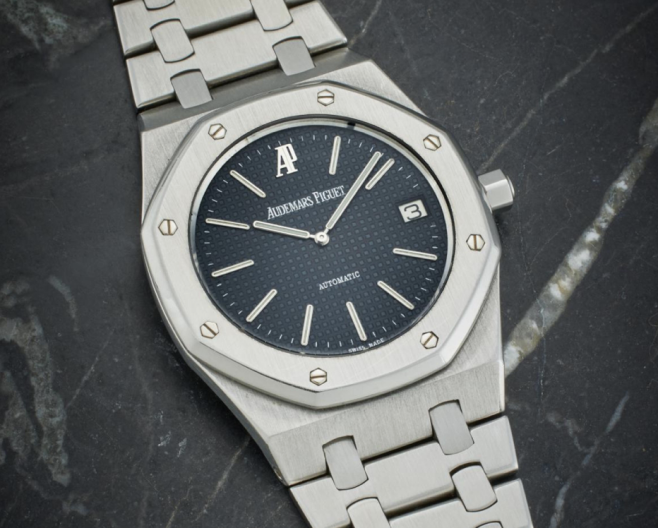
In the early 1970s, the Swiss watch industry faced uncertainty as economic shifts and emerging quartz technology threatened traditional mechanical watchmaking. Seeking something radically different, Audemars Piguet asked renowned designer Gérald Genta to create a groundbreaking sports watch that could redefine luxury. Legend holds that in 1971, AP's managing director Georges Golay requested a design overnight; by the next morning, Genta had sketched what would become the Royal Oak. Unveiled at the 1972 Basel Fair, the Royal Oak reference 5402ST was unlike anything the watch world had seen. Its bold design drew inspiration from the exposed bolts of a vintage deep sea diving helmet, translated into an octagonal bezel secured by eight visible hexagonal screws, paired with a sharply finished integrated steel bracelet. The dial featured the now iconic Petite Tapisserie guilloché pattern, giving the watch both technical precision and refined texture. What truly shocked the market was the concept itself: a luxury watch made entirely from stainless steel, priced at the level of precious metal dress watches. At 39 mm, the watch was unusually large for the era and quickly earned the nickname Jumbo. Only about 1,000 pieces of the original A series 5402ST were produced in the first run, marking the birth of what is now widely considered the first true luxury sports watch. Initially controversial, the Royal Oak eventually transformed the industry and secured Audemars Piguet's future. Its daring combination of industrial design, high end finishing, and integrated bracelet architecture created an entirely new category in horology, one that later inspired icons such as the Patek Philippe Nautilus. Today, the 1972 Royal Oak 5402ST stands as one of the most important watches ever produced, the blueprint for modern luxury sports watches and the foundation of Audemars Piguet's most celebrated collection.
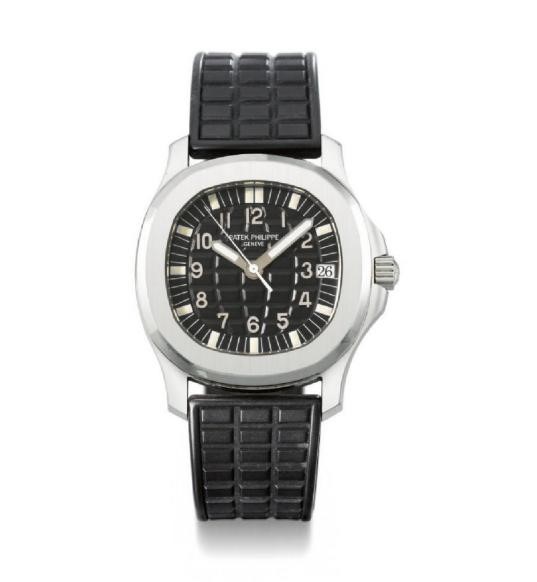
The Patek Philippe Aquanaut Ref. 5060A, introduced in 1997, marked a decisive shift in Patek Philippe’s philosophy as the maison set out to engage a younger, more contemporary audience without compromising its legacy of refined watchmaking. By the late 1990s, the success of the Nautilus Ref. 3700, originally designed by Gérald Genta in 1976, had already demonstrated that a steel luxury sports watch could thrive alongside traditional dress pieces. However, evolving tastes signaled a growing demand for something more casual, more modern, and less formal. Patek Philippe responded with a bold reinterpretation of its sports watch identity. The Aquanaut was conceived as a more relaxed and youthful counterpart to the Nautilus. While it retained the signature rounded octagonal case shape inspired by its predecessor, it introduced a softer, more contemporary design language that felt distinctly modern for its time. One of its most groundbreaking features was the introduction of the “tropical” composite strap, a first for Patek Philippe. Engineered for durability, it was resistant to saltwater, ultraviolet radiation, and general wear, an unconventional move for a brand deeply rooted in traditional haute horlogerie. This alone signaled a major departure from the maison’s conservative material choices. The dial further reinforced this new identity with its embossed “grenade” pattern, a textured checker motif designed to visually integrate with the strap. This cohesive aesthetic created a sporty, unified look that stood in sharp contrast to the ornate guilloché and enamel dials typically associated with Patek Philippe. Housed in a 36 mm stainless steel case, the 5060A was powered by the automatic Caliber 330 SC and featured a solid caseback, consistent with the brand’s sports models of the era. While modest by today’s standards, its proportions and material execution were considered unconventional at launch, particularly given its positioning as an accessible entry point into Patek Philippe’s sports luxury segment. The model had a short production life and was quickly succeeded in 1998 by the larger Ref. 5065, often referred to as the Aquanaut Jumbo. As a result, the original 5060A remains relatively scarce and historically significant. Today, the Aquanaut 5060A is recognized as the foundation of one of Patek Philippe’s most sought after modern collections. Its introduction represented more than just a new model; it marked a cultural evolution within the brand, embracing contemporary materials, casual elegance, and a new generation of collectors while preserving the craftsmanship and mechanical integrity that define Patek Philippe.
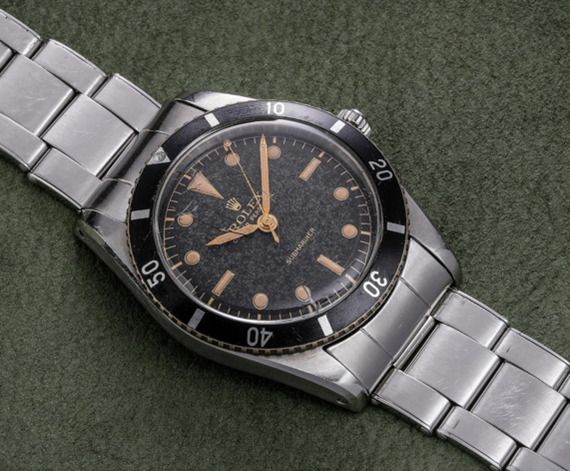
The Rolex Submariner Reference 6204, introduced in 1953 by Rolex, represents one of the most significant milestones in the history of professional tool watches and is widely regarded as the foundation of the modern dive watch category. During the early 1950s, recreational scuba diving was rapidly gaining popularity following the pioneering work of underwater explorers such as Jacques Yves Cousteau, whose documentaries and technological innovations sparked global fascination with the underwater world. As diving expanded from military and scientific use into civilian exploration, there was a growing demand for a wristwatch capable of withstanding underwater pressure while remaining highly legible and reliable in extreme conditions. Recognizing this opportunity, Rolex engineers began developing a purpose built diver's watch that could combine the company's existing expertise in waterproof cases with new functional design elements tailored specifically for underwater timing. The result was the Submariner, first publicly revealed at the Basel Watch Fair in 1954 but already produced in small quantities beginning in 1953 with the reference 6204, considered by collectors to be the earliest production Submariner reference. Building upon the waterproof "Oyster" case technology that Rolex had introduced decades earlier, the 6204 was engineered to withstand depths of 100 meters (330 feet) an impressive achievement at the time and a major advancement for professional diving equipment. The watch featured a 37 mm stainless steel Oyster case, a bidirectional rotating bezel used to measure elapsed dive time, and a highly legible black dial with luminous radium markers and Mercedes style hands designed for visibility in dark underwater environments. These design features particularly the rotating bezel and high contrast dial became defining elements of dive watches across the entire industry. Inside the watch, Rolex fitted the reliable A260 automatic movement, a self winding caliber known for durability and precision. The self winding mechanism was especially important for divers, as it eliminated the need for frequent crown manipulation that could compromise the watch's water resistance. Early Submariner 6204 examples were paired with the Rolex Oyster bracelet, a robust stainless steel bracelet designed to withstand harsh marine environments while maintaining comfort and durability. The combination of the Oyster case, screw down crown, and sealed construction ensured that the watch maintained its waterproof integrity even during extended underwater use. The aesthetic of the 6204 was utilitarian yet elegant, reflecting Rolex's philosophy that professional instruments should maintain a refined appearance suitable for everyday wear. Unlike later Submariner references, the earliest models often lacked the "Submariner" name on the dial, emphasizing the watch's experimental and transitional nature as Rolex refined the design for mass production. Shortly after the 6204, Rolex introduced subsequent references such as the Rolex Submariner Reference 6205 and Rolex Submariner Reference 6200, each improving water resistance, dial configurations, and case construction while solidifying the Submariner's identity as the premier diving watch.
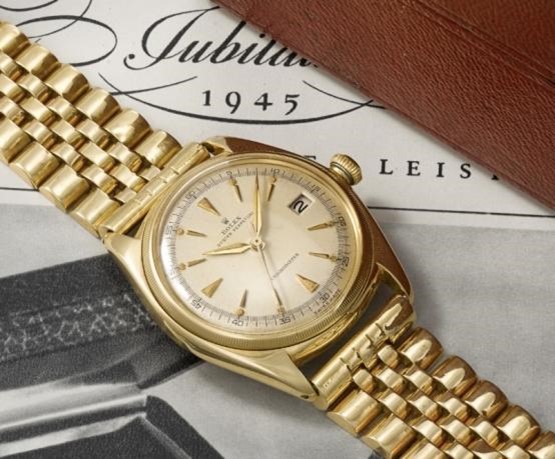
The Rolex Datejust reference 4467, introduced in 1945, marked a turning point in watchmaking history and celebrated the 40th anniversary of Rolex. Conceived under the leadership of founder Hans Wilsdorf, the watch was designed to showcase the company's most advanced technologies in a single model. It became the world's first self winding chronometer wristwatch with an automatically changing date displayed in a window on the dial, a revolutionary feature at the time. The mechanism allowed the date to change automatically around midnight, an innovation so precise that Rolex named the model "Datejust," meaning the date was always correct without manual adjustment. Reference 4467 debuted in a 36 mm Oyster case in solid 18 carat yellow gold, combining Rolex's waterproof Oyster case, its automatic Perpetual rotor movement, and the new date aperture at 3 o'clock. It was paired with the newly designed five link Jubilee bracelet, created specifically for the watch's anniversary launch. Early examples had a domed "bubbleback style" caseback, earning the nickname "Ovettone" ("big egg") among collectors, and featured a fluted bezel that would become a signature design element of the Datejust line. Though relatively few were produced between 1945 and 1949, the reference 4467 established the blueprint for what would become one of the most enduring models in horology. Nearly every Rolex Datejust produced today still follows the formula first introduced with the 4467: a 36 mm case, fluted bezel, date window at 3 o'clock, and an elegant balance between dress watch refinement and everyday durability. What began as a commemorative anniversary watch ultimately evolved into Rolex's most recognizable and longest running collection, making the Datejust 4467 the true origin of one of the most iconic watches ever made.
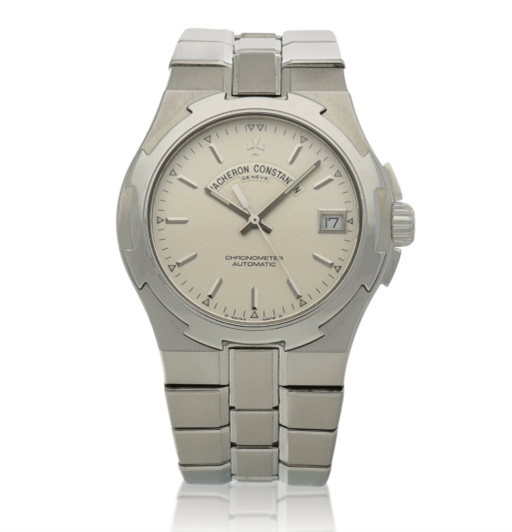
The Vacheron Constantin Overseas reference 42040, introduced in 1996, marked the rebirth of Vacheron Constantin's modern luxury sports watch and the beginning of what would become one of the brand's most important contemporary collections. The model was created as the successor to the 222, a sporty integrated bracelet watch originally launched in 1977 for Vacheron Constantin's 222nd anniversary. While the 222 had quietly established the brand in the emerging category of luxury steel sports watches dominated by Gérald Genta designs such as the Royal Oak and Nautilus, it was the Overseas that fully modernized the concept for a new generation of collectors and travelers in the 1990s. Designed under the direction of Vacheron Constantin's design team led by Vincent Kaufmann, the Overseas 42040 retained the integrated sports luxury aesthetic but introduced a more technical and travel oriented identity. Its distinctive bezel design, shaped to echo the arms of the Maltese Cross, the historic emblem of Vacheron Constantin, gave the watch an instantly recognizable architectural profile. The watch was built in a 37 mm stainless steel case with strong lines, polished bevels, and a robust construction designed for everyday wear. Water resistance was increased to 150 meters, emphasizing the watch's sporting capability while maintaining the finishing standards expected of the Geneva manufacture. Inside the watch was the automatic caliber 1310, based on the highly respected Girard Perregaux 3100 movement, chosen for its thin profile and reliability. This allowed the Overseas to remain elegant despite its sporty build, delivering approximately 44 hours of power reserve and precise chronometer grade performance. The movement was protected by a soft iron inner cage, giving the watch resistance to magnetic fields an important feature for international travelers and professionals frequently exposed to electronic equipment. The integrated bracelet of the Overseas became another defining feature. Each link was subtly shaped to reflect the geometry of the Maltese Cross, blending seamlessly into the case and giving the watch a fluid, sculptural appearance on the wrist. Dials were typically offered in deep blue, silver, or black, finished with applied hour markers and luminous hands to ensure legibility in both formal and active settings. When released in 1996, the Overseas 42040 positioned Vacheron Constantin firmly within the elite category of luxury sports watches, alongside the Royal Oak, Nautilus, and later the Audemars Piguet Offshore. It represented the maison's answer to the growing demand for a watch that combined high horology, durability, and global versatility. Over time, the Overseas collection evolved through multiple generations, but the 42040 remains historically significant as the model that established the Overseas identity and revived Vacheron Constantin's presence in the modern luxury sports watch segment.
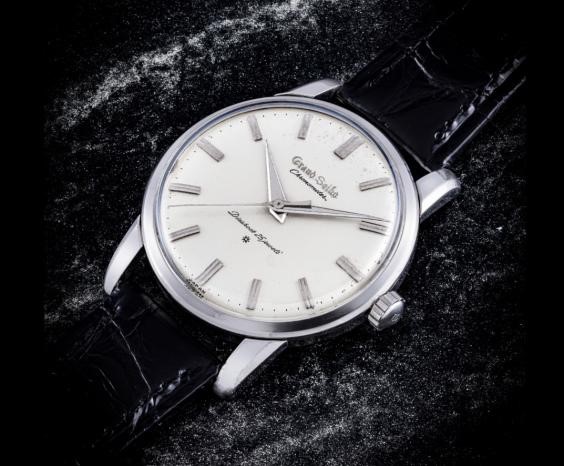
In 1960, Grand Seiko was born from a singular ambition: to create the most precise, durable, and legible wristwatch possible one that could stand alongside the finest Swiss timepieces of the era. Developed by Seiko's most skilled watchmakers at the Suwa Seikosha studio in Japan, the first Grand Seiko was not conceived as a mass market product, but as a statement of capability and intent. The inaugural reference J14070 featured a hand wound movement regulated to standards exceeding contemporary chronometer requirements, housed in a meticulously finished gold filled case with razor sharp geometry and a restrainned silver dial designed for maximum clarity. Its now iconic design language later formalized as the "Grand Seiko Style" emphasized flat surfaces, mirror like polishing, sharp angles, and perfectly proportioned indexes to reflect light with precision and purpose. Even at its inception, Grand Seiko rejected excess ornamentation in favor of functional beauty, believing true luxury was found in accuracy, craftsmanship, and longevity. The gold lion medallion engraved on the caseback symbolized this pursuit: strength, pride, and leadership in watchmaking. What began as an internal challenge quickly became a defining philosophy, laying the foundation for decades of innovation in mechanical, quartz, and Spring Drive movements. Today, the first Grand Seiko stands as a quiet but powerful origin proof that the pursuit of perfection, when uncompromisingly pursued, defines what a watch is capable of
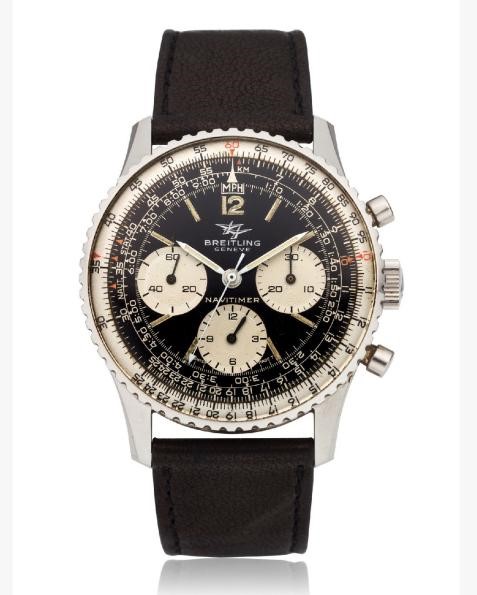
First introduced in 1952, the Breitling Navitimer emerged as a quintessential tool watch for aviators, blending advanced chronograph functionality with a slide rule bezel for complex aviation calculations. Reference 806, the original Navitimer, was specifcally designed in collaboration with the Aircraft Owners and Pilots Association (AOPA) to cater to the needs of pilots, debuting as the association's official watch with the AOPA's winged logo on the dial. With its 41mm stainless steel case and distinctive three register black dial, the Navitimer featured a revolving slide rule bezel that could calculate critical flight data such as fuel consumption, climbing times, and airspeeds. Powered by the manual wind Venus 178 chronograph movement, the Navitimer provided functionality that went far beyond typical time telling, establishing a new standard in form and function for pilots' instruments. During the golden age of aviation, this timepiece not only captured the spirit of progress and adventure but also became an indispensable tool for pilots, symbolizing precision navigation and reliability in the skies. Its introduction cemented Breitling's place at the forefront of horological innovation and sheparled the Navitimer into legend as the go to watch for aviators around the world.
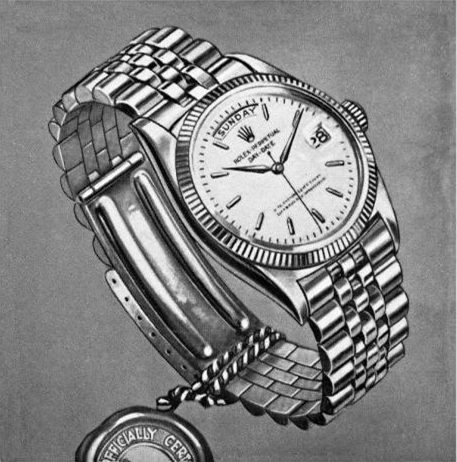
Introduced in 1956, the Rolex Day Date was the world's first wristwatch to display both the date and the full day of the week spelled out at the 12 o'clock position. Reference 6511 combined two complications a day disc and a date disc into a single, elegant, and water resistant 36mm Oyster Perpetual case made from luxurious 18k gold, marking Rolex's entry into the realm of the ultra prestigious. The Day Date's President bracelet, introduced alongside the watch, was distinguished by its semi circular, three piece links, exuding opulence and comfort. Beyond its technical innovations powered by the automatic, chronometer certified caliber 1055 the Day Date set a new standard for what a luxury watch could be, symbolizing not just wealth, but influence and power. At a time when world leaders, visionaries, and luminaries dominated the social and political landscape of the mid 20th century, the Day Date quickly became the "president's watch," often photographed on the wrists of presidents, dignitaries, and trailblazers who shaped history. The watch's dial featured the day of the week, spelled out in a gentle arc at 12 o'clock, and the date magnified by the iconic Cyclops lens at 3 o'clock. People thit note of its technical leap, but also its statement of aspiration and achievement. The Rolex Day Date, with its combination of precision, prestige, and practicality, became a symbol of success that resonated far beyond the world of watch aficionados, setting a new benchmark for elegance and functionality.
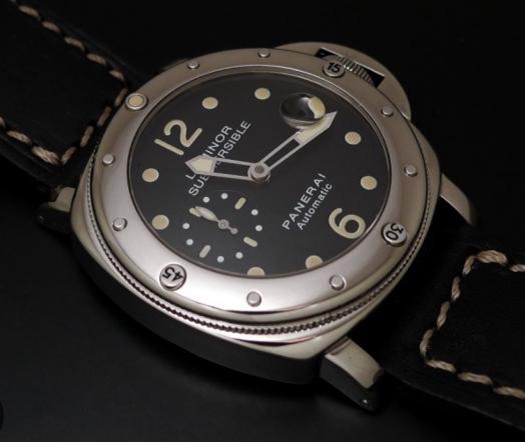
Debuting in 1998, the Panerai Submersible PAM 24 marked Panerai's leap into the realm of modern dive watches, merging the brand's storied military history with contemporary functionality. Reference PAM 24 was the first Submersible, expanding on Panerai's legacy of rugged timepieces originally created for the Italian Navy: Building upon the iconic Laminor case, it introduced a rotating liver's begel a first for Panerai, featuring a 60 minute graduated scale designed for underwater timing Housed in a robust 44mm 316L stainless steel case with a datinctive unidi rectional rotating bezel, and powered by the automatic OP III Caliber a ruodified ETA 7750 this watch was engineered for serious underwater use with a water resistan ce of 300 meters. The PAM 24 retained the patented crown protecting lever characteristic of the Luminor line, ensuring the watch was able to withstand the rigors of deep dives while remaining securely watertight. The dial, with its large luminescent markers and hands, provided exceptional legibility in low light conditions, crucial for divers. The PAM 24 was a bold, utilitarian evolution of Paneral beritage, combirung heavy duty dive watch functionality with the distinctive Panerai aesthetic. This breakthrough model not only reinforced Panerai's association with underwater exploration but also established the Submersible as a modern icon in the world of robust, luxury diving instruments,