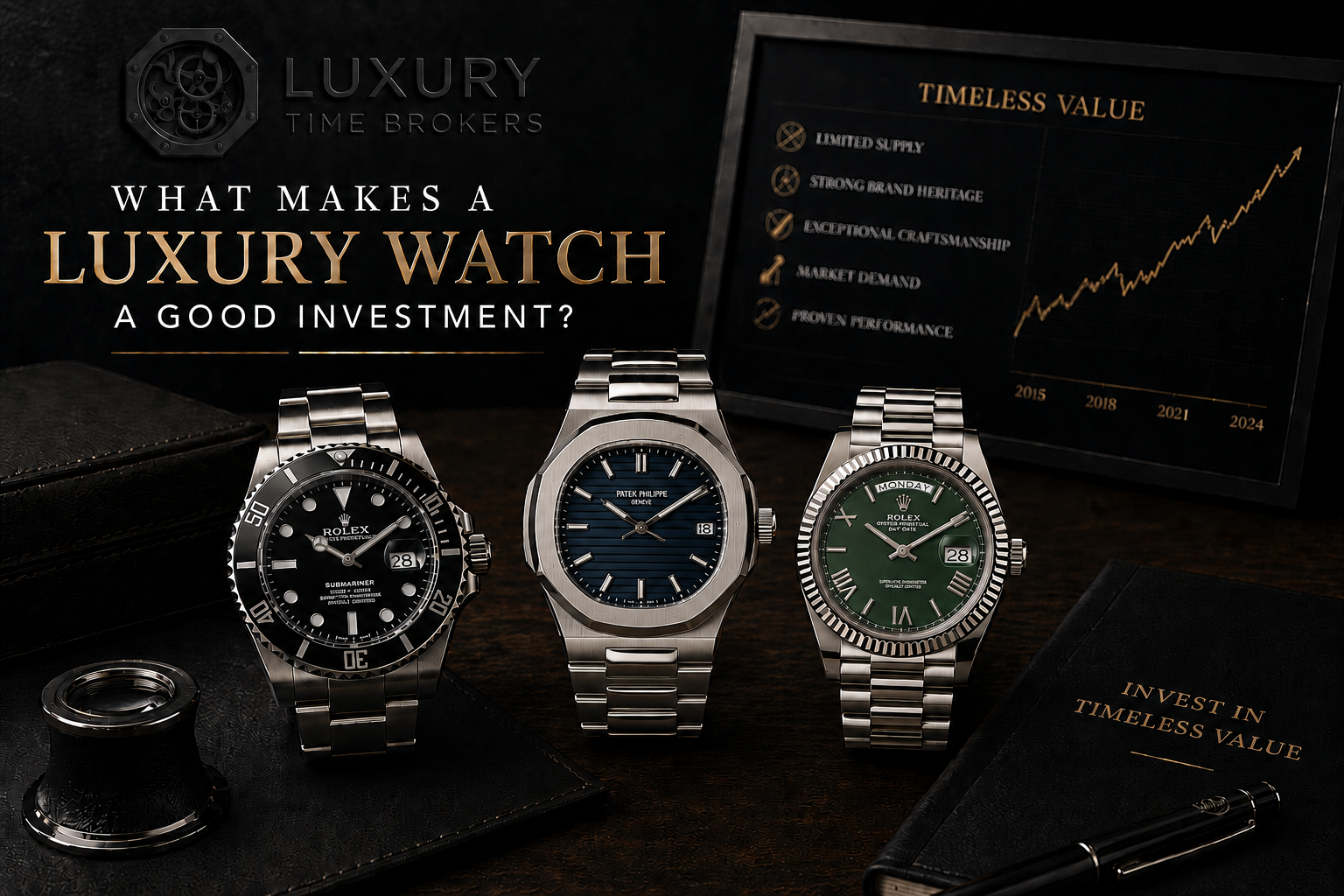
Luxury watches have evolved into one of the most respected alternative asset categories in the modern luxury market. While high end timepieces were once purchased almost exclusively for craftsmanship, prestige, and personal enjoyment, collectors today increasingly evaluate watches through the lens of long term value retention and investment potential. In 2026, the luxury watch market has matured into a global ecosystem where rare and highly desirable references regularly trade for substantial premiums over retail pricing.
However, not every luxury watch becomes a strong investment. Some models appreciate dramatically over time, while others lose value immediately after purchase. Understanding what separates investment grade watches from ordinary luxury products is essential for collectors entering the market today.
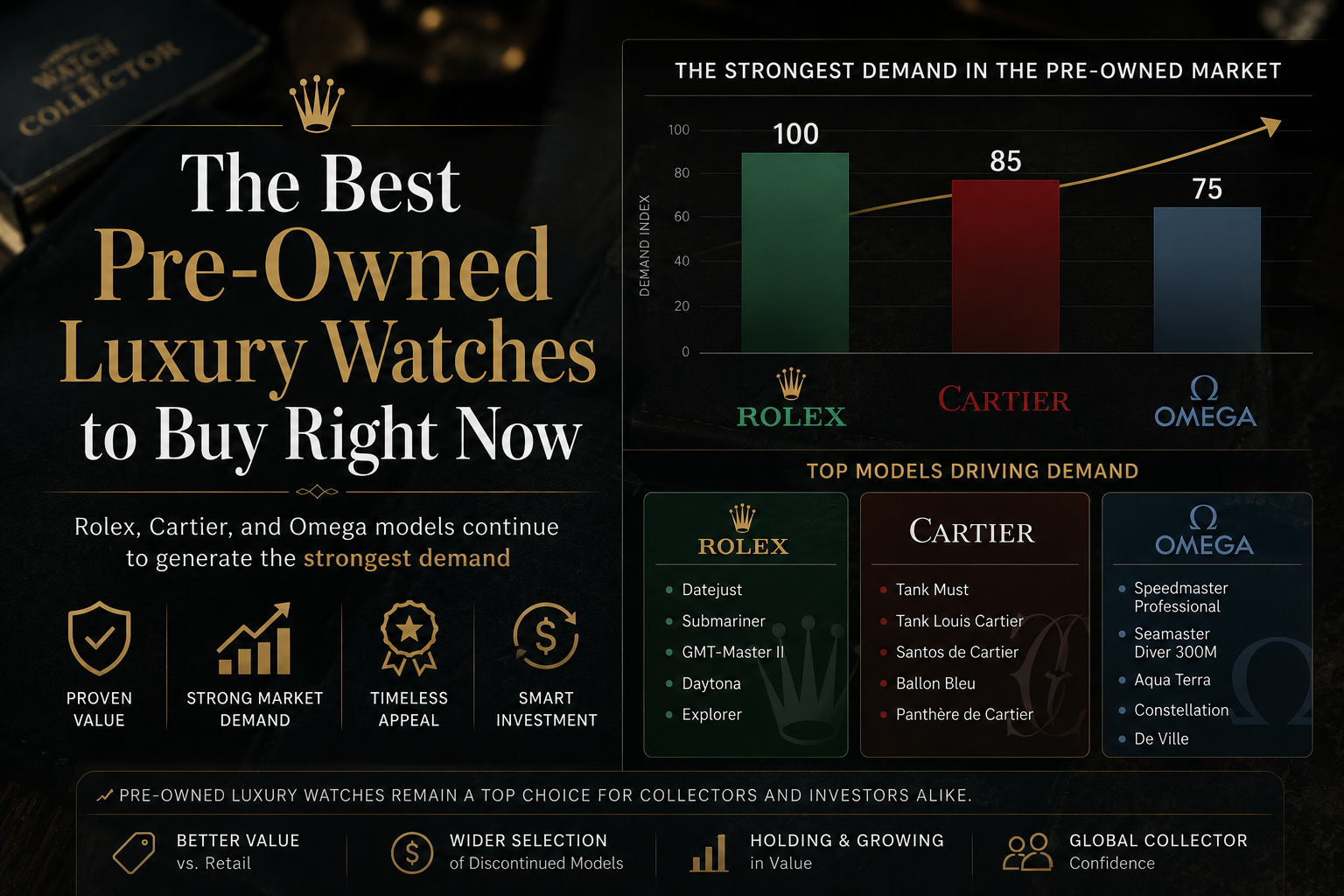
One of the most important factors influencing long term watch appreciation is brand strength. Brands with global recognition, historical importance, and strong collector demand consistently outperform lesser known manufacturers. Rolex remains the clearest example of this principle. No luxury watch brand combines liquidity, prestige, and resale stability better than Rolex.
Collectors trust Rolex because the company has spent decades building a reputation around reliability, timeless design, and controlled production. Models such as the Daytona, GMT Master II, and Submariner continue commanding extraordinary demand because buyers around the world immediately recognize and value them.
Patek Philippe represents another major investment grade brand. Unlike Rolex, Patek Philippe produces far fewer watches annually, which increases exclusivity substantially. The Nautilus and Aquanaut collections remain among the most difficult watches to acquire through authorized dealers. This scarcity drives intense competition within the secondary market.
Audemars Piguet also continues performing exceptionally well because of the strength of the Royal Oak collection. The Royal Oak transformed the luxury sports watch market in the 1970s and remains one of the most recognizable watch designs in the world today.
Scarcity itself is another major factor that determines whether a luxury watch becomes collectible. Watches that are difficult to obtain naturally generate stronger long term demand. Controlled production creates exclusivity, and exclusivity drives collector interest.
Rolex sports models illustrate this dynamic perfectly. Waiting lists at authorized dealers for Daytona, GMT Master II, and Submariner references often stretch years into the future. Because buyers cannot easily obtain these watches at retail pricing, secondary market values remain elevated.
Production numbers also matter significantly. Brands that produce fewer watches generally maintain stronger exclusivity. Patek Philippe and Audemars Piguet intentionally limit production to preserve brand prestige and collector demand.
Historical significance can dramatically impact long term collectibility as well. Watches tied to important events, technological innovations, or cultural moments often appreciate more strongly than ordinary references. The Omega Speedmaster Professional remains one of the best examples because of its role during NASA’s Apollo missions.
Vintage Rolex Daytona references also command extraordinary auction prices because of their connection to motorsport history and celebrity ownership. Watches associated with influential individuals or historic events often develop stronger emotional appeal among collectors.
Condition is another critical element of investment potential. Collectors strongly prefer watches with original components, minimal polishing, and complete documentation. Original dials, untouched cases, and factory accessories can significantly increase long term value.
Watches that include original boxes, warranty cards, manuals, receipts, and service history generally perform better in the resale market. Complete sets provide authenticity reassurance while increasing collector confidence.
Discontinued references frequently become highly desirable because production permanently ends while demand continues growing. Many of today’s most valuable luxury watches were once ordinary production pieces before becoming scarce over time.
The Rolex Hulk Submariner, Rolex Kermit Submariner, and numerous discontinued GMT Master II references demonstrate how powerful discontinuation can become. Once collectors realize production has ended, demand often accelerates dramatically.
Timeless design also plays a major role in long term value retention. Watches with clean proportions and enduring aesthetics tend to remain desirable across multiple generations. Rolex rarely makes radical design changes, which allows older references to remain visually connected to modern production models.
Collector communities significantly influence market demand as well. Online forums, YouTube channels, social media platforms, and auction coverage all contribute to collector awareness. Watches with strong enthusiast followings often experience faster appreciation because information spreads quickly through global collector networks.
Auction performance provides another useful indicator of long term collectibility. Watches that consistently perform well at major auction houses often gain credibility among investors and collectors. Vintage Patek Philippe, Rolex Daytona, and rare Royal Oak references regularly break records because collectors view them as historically important assets.
The rise of the pre owned luxury watch market has also transformed investment collecting. Buyers today are more comfortable purchasing pre owned watches because authentication standards and transparency have improved significantly.
Trusted luxury watch dealers now provide detailed condition reports, authentication guarantees, and market guidance that help buyers navigate the secondary market safely.
Liquidity remains another reason certain luxury watches perform so strongly as investments. Rolex watches, for example, can often be sold quickly because of consistent worldwide demand. This liquidity gives buyers confidence when purchasing high value timepieces.
Economic conditions have also contributed to luxury watch appreciation in recent years. During periods of inflation or market uncertainty, collectors increasingly seek tangible luxury assets that maintain demand globally. Luxury watches fit naturally into this category because they combine portability, collectibility, and brand prestige.
However, buyers should avoid viewing luxury watches purely as speculative investments. Market conditions can fluctuate, and not every reference will appreciate equally. Collectors should prioritize watches they genuinely enjoy owning and wearing.
The strongest collections are usually built around passion and long term appreciation for watchmaking itself. Watches purchased solely for speculation often create disappointment if market trends shift.
Modern collectors also increasingly appreciate independent watchmakers and limited production brands. While Rolex, Patek Philippe, and Audemars Piguet dominate the mainstream investment conversation, smaller brands with exceptional craftsmanship can also become highly collectible.
Ultimately, the best luxury watch investments combine timeless design, strong heritage, limited production, excellent condition, and sustained collector demand. Watches that succeed across all these categories tend to perform best over decades rather than short term hype cycles.
The luxury watch market in 2026 remains one of the most exciting enthusiast and investment spaces in the world. As global interest continues growing, the most iconic and historically important watches are likely to remain highly desirable.
Luxury Time Brokers continues helping collectors source authenticated investment grade luxury watches while providing guidance on collectibility, rarity, market trends, and long term ownership.